The Virtual Ward – using technology to support Aortic Dissection patients at home
Dr Tara Mastracci explores how Barts Heart Centre is using remote monitoring to support people after Aortic Dissection — helping patients manage their blood pressure at home while maintaining a direct connection with their clinical team.
Life after Aortic Dissection
For people who survive an Aortic Dissection, leaving hospital is not the end of their treatment.
Ongoing surveillance is essential, particularly during the early months and years when changes to the aorta may be more likely. Patients can require lifelong imaging and follow-up, while good blood pressure control remains an important part of their ongoing care.
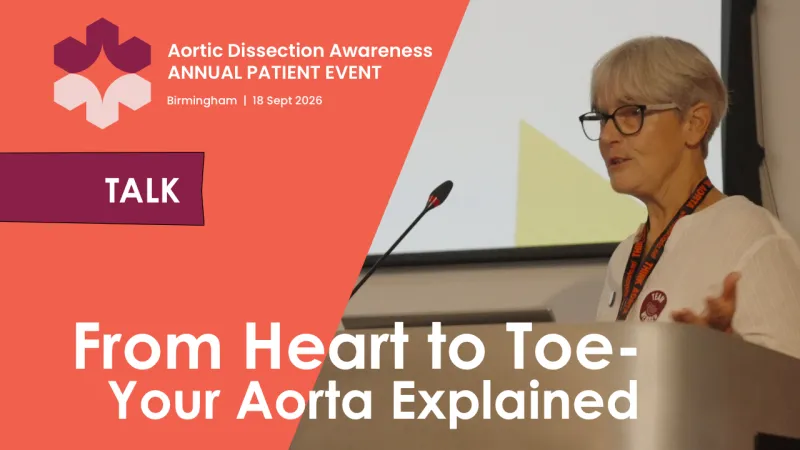
At our 2026 Annual Patient Event, Dr Tara Mastracci, Consultant Vascular Surgeon at Barts Heart Centre, London, explained how her team is approaching this challenge and why they believe technology can help.
Bringing the hospital into the home
Rather than relying solely on traditional hospital appointments, Barts has developed a Virtual Ward that allows patients to record their blood pressure remotely using a digital platform.
The clinical team can monitor those readings over time, identify potential problems and communicate directly with patients when necessary.
Around 400 patients have participated in the programme, providing the team with a detailed picture of blood pressure outside the hospital environment. Tara discusses the evidence behind remote monitoring and shares some of the results the Barts team has seen in its own patients.
In this talk
- Speaker: Dr Tara Mastracci, Consultant Vascular Surgeon, Barts Heart Centre
- Event: Annual Patient Event 2026, Birmingham
- Duration: 19:53
- Topics: Aortic Dissection · Follow-up Care · Blood Pressure · Virtual Ward · Remote Monitoring · Patient Support
More than an app
One of the most important lessons from the Virtual Ward has been that technology alone isn't enough.
Tara explains that having a real person at the other end of the system is a crucial part of making remote monitoring work. Patients need help understanding the technology, but they also value being able to contact someone with a question or concern.
That human connection has become one of the unexpected benefits of the programme.
The experience has also highlighted the problem of digital exclusion. Not everyone has access to a smartphone, feels comfortable using an app, speaks English as a first language or has the time and resources to engage consistently with their healthcare.
Tara argues that new technology must therefore be designed around patients rather than expecting every patient to adapt to the technology.
Supporting the whole patient
The talk also considers the emotional realities of living with Aortic Dissection.
Regular surveillance can bring its own anxiety — sometimes described as “scanxiety” — and Tara discusses why clinicians need to recognise that decisions about medication, appointments and scans aren't made in isolation from the psychological impact of surviving a major medical emergency.
For Tara, the ideal model combines remote monitoring and better use of technology with specialist clinicians, primary care and patient organisations working together around the individual patient.
As she concludes, technology has an important role to play — but we can't forget the humans surrounding the whole pathway.
This presentation was recorded at the Aortic Dissection Awareness UK & Ireland Annual Patient Event 2026, held in Birmingham on 18 September 2026.