Driving After Aortic Dissection – Understanding the DVLA Rules
Dr Nass Lamprakis, Senior Doctor & Adviser at the DVLA, explains the medical standards for driving after Aortic Dissection, how licensing decisions are made and what drivers need to know about their responsibilities.
Driving after Aortic Dissection
For many people recovering from an Aortic Dissection, returning to driving is an important step towards regaining independence and normality. However, understanding when it is safe and legal to drive, whether the DVLA needs to be informed and how medical licensing decisions are made can be confusing.
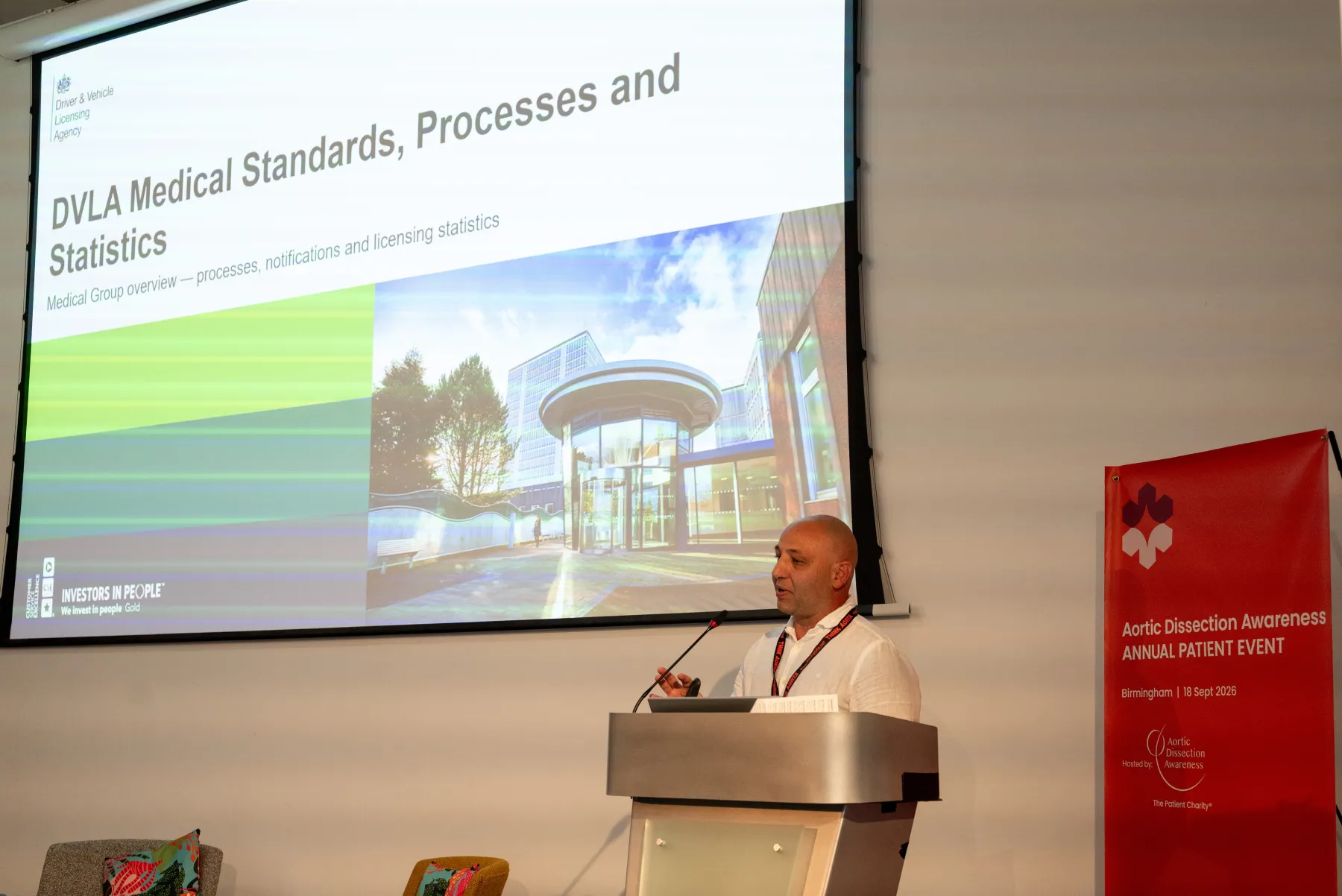
In this presentation from our 2026 Annual Patient Event in Birmingham, Dr Nass Lamprakis, Senior Doctor & Adviser at the Driver and Vehicle Licensing Agency (DVLA), explains how the organisation assesses fitness to drive and the specific medical standards that apply to people affected by Aortic Dissection.
Nass also provides a fascinating behind-the-scenes look at the DVLA's medical licensing operations, including the scale of its work, the challenges involved in gathering medical evidence and the improvements being introduced to speed up decision-making.
In this talk
- When drivers must notify the DVLA about a medical condition.
- How the DVLA assesses fitness to drive and gathers medical evidence.
- The differences between Group 1 (cars and motorcycles) and Group 2 (buses and lorries) driving licences.
- How aortic diameter, blood pressure control and clinical stability influence driving standards following Type A or Type B Aortic Dissection.
- Why some drivers receive time-limited medical licences requiring regular reviews.
- How the DVLA works with healthcare professionals when assessing medical conditions.
- How new digital systems and automation are helping to reduce delays in licensing decisions.

Understanding the rules
One of the key messages from Nass's presentation is that drivers have a legal responsibility to notify the DVLA about medical conditions that may affect their ability to drive safely.
For people affected by Aortic Dissection, the DVLA's published medical standards consider factors including the diameter of the aorta, blood pressure control, clinical stability and ongoing medical monitoring.
The requirements also differ depending on the type of vehicle being driven. Group 2 licences, covering buses and lorries, are subject to stricter medical standards than ordinary car and motorcycle licences because of the greater potential consequences of a sudden medical emergency behind the wheel.
Nass explains what happens when someone notifies the DVLA about a medical condition, from completing the relevant forms and obtaining information from consultants to receiving a licensing decision. Depending on individual circumstances, the outcome may include a full licence, a time-limited medical licence or restrictions on driving.
Improving the licensing process
The DVLA manages medical licensing decisions for millions of drivers, and obtaining information from patients and healthcare professionals can sometimes make the process frustratingly slow.
Nass describes the work underway to modernise the system, including online medical notifications, automated case processing and potential integration with electronic health records.
He reports that average decision times had fallen from 71 days to 56 days following the introduction of a new casework system, with further improvements planned.
For patients waiting to return to driving, these developments could help reduce uncertainty and delays.
Supporting patients and healthcare professionals
The presentation highlights the importance of communication between patients, clinicians and the DVLA.
Healthcare professionals have an important role in helping patients understand the relevant medical standards, while drivers themselves must ensure that they meet their legal responsibilities.
By explaining how decisions are made and why certain medical information is required, Nass provides valuable guidance for people navigating the process of returning to driving after an Aortic Dissection.
For the latest medical driving standards, visit the DVLA's official guidance:
Assessing Fitness to Drive – A Guide for Medical Professionals
This presentation was recorded on 18 September 2026. Driving standards may change, and individual circumstances vary. Always seek advice from your healthcare team and consult the latest DVLA guidance before making decisions about driving.