Essay: The Psychological Impact of Surviving an Aortic Dissection - by Deirdre Clinch (ADA, Ireland)
Surviving an aortic dissection is about far more than physical recovery. In this thoughtful article, our Ireland Committee member explores the often-overlooked psychological impact of surviving a life-threatening event, including trauma, anxiety and rebuilding confidence, while highlighting the importance of recognising emotional healing as part of the recovery journey.
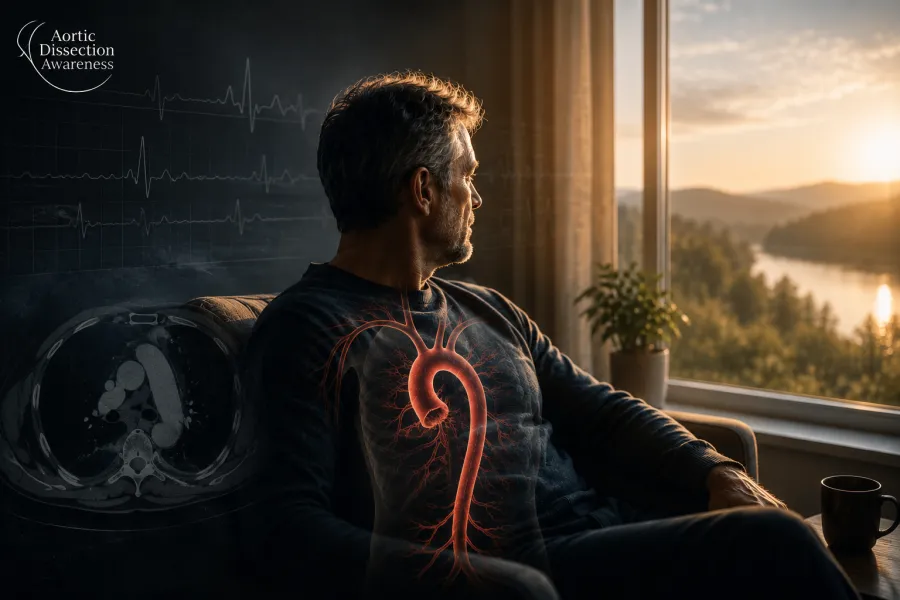
Surviving an aortic dissection is often described as a second chance at life. While medical advances have improved survival rates, the psychological consequences of surviving a sudden and potentially fatal cardiovascular event are frequently overlooked. For many survivors, emotional recovery can be as challenging and enduring as physical recovery.
An aortic dissection occurs abruptly, often without warning, confronting individuals with an immediate awareness of their mortality. The experience of severe pain, emergency surgery, admission to intensive care, uncertainty regarding survival, and prolonged rehabilitation can meet the criteria for a traumatic event. Research suggests that survivors of life-threatening cardiac events may experience symptoms associated with Post-Traumatic Stress Disorder (PTSD), including intrusive memories, nightmares, hypervigilance, avoidance behaviours, sleep disturbance, and a persistent sense that danger remains present long after the medical crisis has resolved.
From a psychotherapeutic perspective, trauma can disrupt an individual's fundamental assumptions about safety, predictability and trust in one's own body. Survivors commonly describe a profound shift from viewing their body as reliable to perceiving it as fragile, unpredictable or even betraying them. As Judith Herman (1992) notes in Trauma and Recovery, traumatic experiences can shatter a person's sense of control and continuity, often necessitating a process of rebuilding safety, connection and meaning.
Health anxiety is also a common consequence following an aortic dissection. Veale and Willson (2020) describe health anxiety as a cycle in which benign bodily sensations become interpreted as signs of catastrophic illness, leading to increased vigilance, reassurance-seeking and physiological arousal. Following an aortic dissection, survivors may monitor blood pressure excessively, repeatedly seek reassurance from healthcare professionals or loved ones, avoid exercise, or fear travelling away from medical facilities. While ongoing medical surveillance is essential, distinguishing between appropriate monitoring and anxiety-driven checking behaviours is important in supporting psychological recovery.
Bessel van der Kolk (2014), in The Body Keeps the Score, highlights how trauma is stored not only cognitively but also physiologically. Survivors may experience their nervous system remaining in a state of heightened alertness, responding to ordinary bodily sensations as if they signal imminent danger. This can contribute to panic symptoms, difficulty relaxing, disturbed sleep and persistent fear of recurrence.
Many survivors also grieve the loss of their former identity. Limitations imposed by medication, physical restrictions, changes in employment, altered family roles and uncertainty about the future may lead to feelings of sadness, anger, guilt or hopelessness. Well-intentioned comments such as “You are lucky to be alive” or “it’s only a type B” can sometimes invalidate the complex emotional reality of living with the aftermath of a life-threatening illness.
Psychotherapeutic interventions, including Trauma-Focused Cognitive Behavioural Therapy, Eye Movement Desensitisation and Reprocessing (EMDR), and supportive psychotherapy informed by attachment and trauma theory, can assist survivors in processing the traumatic experience, reducing hypervigilance, rebuilding trust in their bodies and integrating the event into a coherent life narrative. Although psychological distress may persist for months or years, many individuals also report experiences of post-traumatic growth, including a deeper appreciation of life, strengthened relationships, revised priorities and increased compassion for others facing illness.
Recognising the psychological impact of surviving an aortic dissection is essential. Recovery extends beyond surgical repair and physical rehabilitation; it also involves addressing the invisible wounds left by trauma and supporting individuals in reclaiming a sense of safety, agency and hope.
About me
Surviving an aortic dissection changed the way I understand both life and healing. My personal experience has profoundly shaped my understanding of resilience, vulnerability, and the importance of compassionate care.
Alongside my work as a psychotherapist, trained in Gestalt, Person-Centered, and QEC psychotherapy, with a Master's degree in Sexuality Studies, I bring both professional expertise and lived experience to my practice.
I believe that every person carries a unique story, shaped by past experiences and the ways they've learned to navigate adversity. Whether working with trauma, relationships, sexuality, or life's transitions, my therapeutic approach offers a safe, supportive space to explore these experiences, fostering healing, self-awareness, and lasting change.
References
Herman, J. (1992). Trauma and Recovery. Basic Books.
Van der Kolk, B. (2014). The Body Keeps the Score: Brain, Mind and Body in the Healing of Trauma. Viking.
Veale, D., & Willson, R. (2020). Overcoming Health Anxiety. Robinson.
American Psychiatric Association. (2022). Diagnostic and Statistical Manual of Mental Disorders (5th ed., text revision). APA Publishing.